Why Integration Platforms Aren't Enough for Quote-to-Cash
MuleSoft, Celigo, Boomi, Workato, Jitterbit, and Oracle Integration Cloud may be able to connect Salesforce and NetSuite, but Continuous Control governs what happens when the data moves.
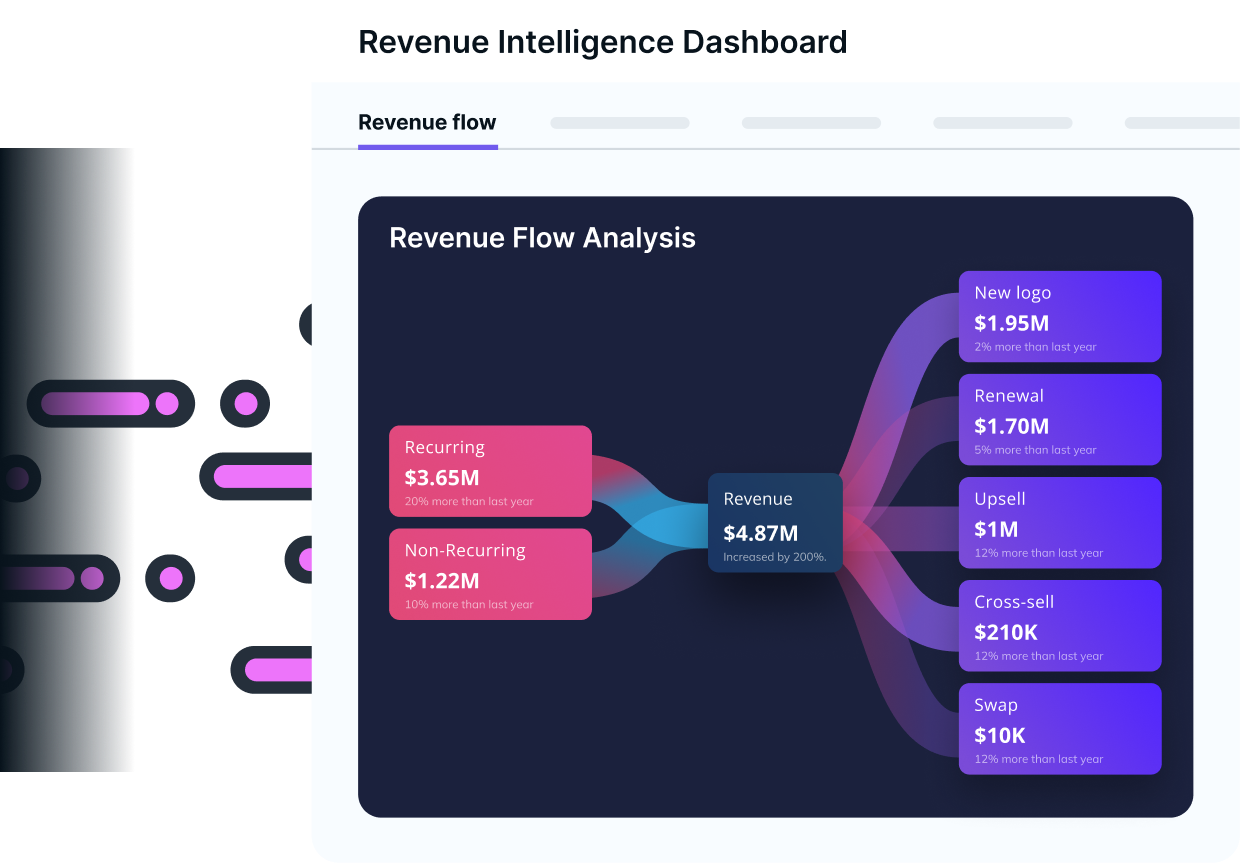
Integration platforms — whether enterprise middleware or application connectors, often referred to as iPaaS — are built to move data between Salesforce and NetSuite reliably. Continuous Control is a finance-aware execution layer that governs what happens after the data moves: ensuring deal changes execute correctly, revenue recognizes accurately, and quote-to-cash stays clean as pricing models evolve. Some customers run both. They solve different problems.
TL;DR This page is for Operations leaders, Finance teams, and IT at mid-market and enterprise SaaS companies using Salesforce and NetSuite. It explains why integration platforms — whether enterprise middleware or application connectors — don't automatically solve the quote-to-cash problem, and what a finance-aware execution layer like Continuous Control does differently.
Enterprise Middleware
Platforms like MuleSoft, Oracle Integration Cloud, Boomi, and Informatica are designed to orchestrate multiple endpoints across complex technology stacks. In larger enterprise environments, middleware is often essential — managing APIs, routing data, and coordinating workflows across CRM, ERP, billing, and downstream systems simultaneously. These are infrastructure-level tools built for scale and complexity.
Application Integration Platforms
Platforms like Celigo, Workato, and Jitterbit are purpose-built for connecting SaaS applications. Celigo's Salesforce-NetSuite connector is one of the most widely deployed in the mid-market. These tools handle data movement, field mapping, and workflow orchestration reliably and are often the fastest path to getting records flowing between systems.
What both categories share is the same boundary. They are built to move and transform data. Neither was designed to govern what happens at the point where Sales ends and Finance begins — where a closed deal has to become a correctly structured NetSuite sales order, where a mid-contract change has to execute without breaking revenue recognition, where a ramp deal has to recognize evenly across three years under ASC 606.
Two Types of Integration Platform — One Shared Limitation
Not all integration platforms are the same, and it's worth being precise. The tools commonly used to connect Salesforce and NetSuite fall into two distinct categories — with different architectures, different buyers, and different roles in the stack.
Demo Control
The integration platform is working...
So why is quote-to-cash across Salesforce and NetSuite still breaking?
Most companies connecting Salesforce and NetSuite start with an integration platform. Whether that's enterprise middleware like MuleSoft, Boomi, or Oracle Integration Cloud — or an application integration platform like Celigo, Workato, or Jitterbit — these are mature, capable tools. They move data reliably between systems. In many architectures, they play an important and ongoing role.
But a working integration doesn't mean quote-to-cash is working. And the organizations that have learned this the hard way will tell you the symptoms are always the same:
-
❌ Manual workarounds between sales and finance
-
❌ Revenue numbers that don't reconcile at close
-
❌ Pricing changes that require rebuilding integration workflows, and/or
-
❌ A finance team perpetually cleaning up deals in NetSuite
The integration isn't the problem. Integration platforms were never designed to solve this problem.
Responsibility |
Middleware |
iPaaS |
Continuous Control |
|
Move and transform data between Salesforce and NetSuite |
Not primary role |
Core strength |
Not primary role |
|
Orchestrate APIs and workflows across multiple systems |
Core strength |
Partial |
Works alongside |
|
Ensure deal changes execute correctly in NetSuite |
Not designed for this |
Not designed for this |
Core capability |
|
Apply ASC 606 revenue allocation and recognition |
Not designed for this |
Not designed for this |
Native capability |
|
Calculate swap credits from recognized revenue, not invoice math |
Not designed for this |
Not designed for this |
Native capability |
|
Keep ramp deals structured correctly through contract term |
Not designed for this |
Not designed for this |
Native capability |
|
Surface real-time revenue position in Salesforce |
Not designed for this |
Not designed for this |
Core capability |
|
Support evolving pricing models without rebuilding workflows |
Increasing complexity |
Increasing complexity |
Designed for change |
|
End-to-end traceability from booking to revenue |
Indirect |
Indirect |
Direct and continuous |
“It doesn't fail loudly. It leaks quietly — through deal changes that execute incorrectly, revenue numbers that drift, and a finance team spending Monday morning on reconciliation work that a properly built system would have prevented entirely.”
Where does Continuous Control Fit In?
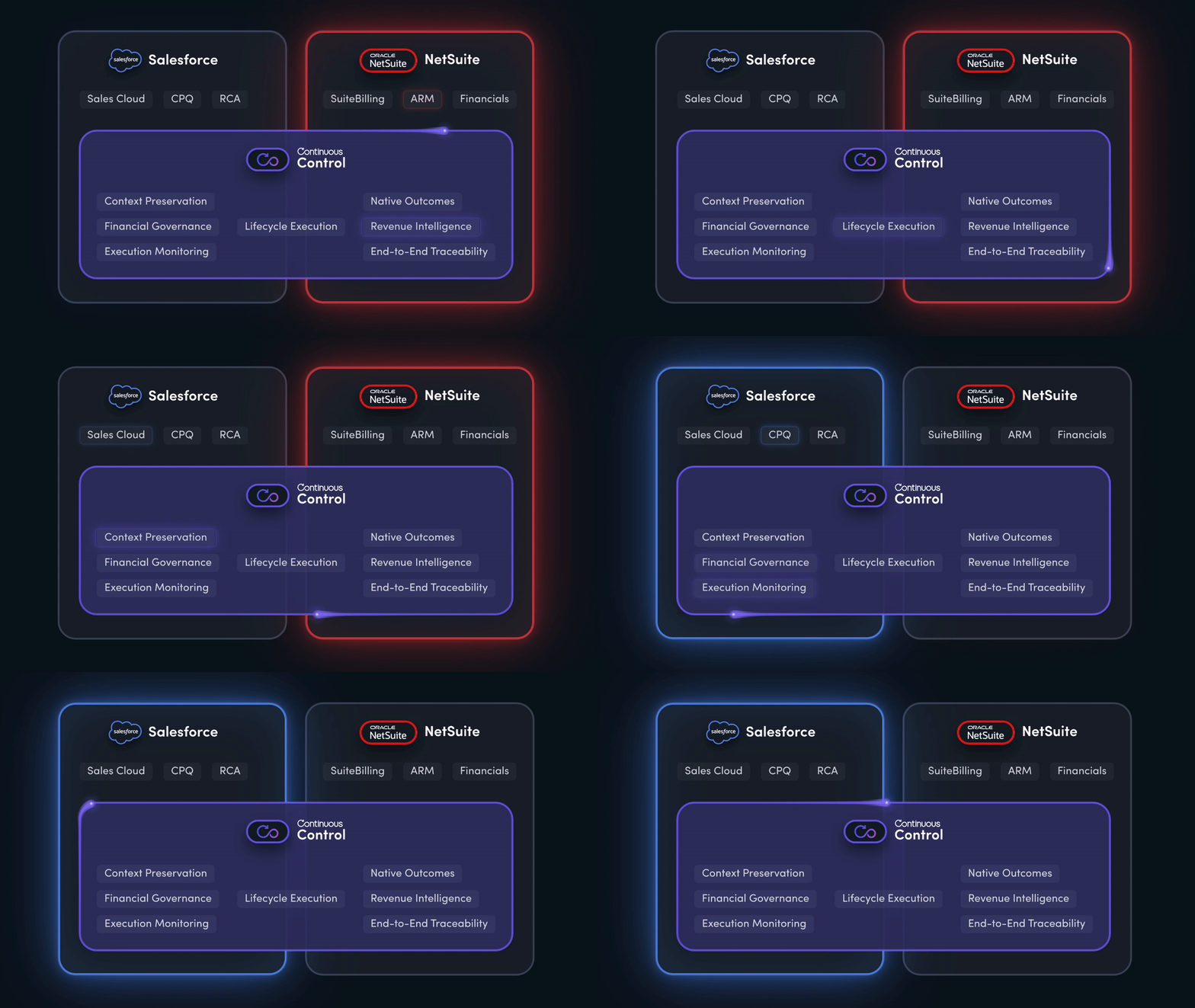
Continuous is a finance-aware lifecycle logic layer, that connects Salesforce selling to NetSuite invoicing and revenue recognition, out of the box, for even the most complex revenue models. Continuous Control is not an integration platform or middleware, but it does excel at connecting Salesforce and NetSuite.
Control uses pre-configured use cases to translate what Sales sells (or amends) into correct sales orders in NetSuite — so invoices, and revenue recognition work as designed — using NetSuite native capabilities. Certified by both Salesforce and NetSuite, built to govern what happens at the boundary between CRM and ERP. Continuous Control ensures that every deal change — amendments, ramps, swaps, upgrades, cancellations — executes correctly in NetSuite, as the right sales order, with the right revenue recognition, with full traceability from booking to billing to recognized revenue.
This creates a clean separation of responsibilities:
✅ Enterprise middleware orchestrates endpoints, manages APIs, and routes data across the stack.
✅ Application integration platforms move and transform data between Salesforce and NetSuite reliably.
✅ Continuous Control governs how pricing, usage, and financial outcomes behave across systems.
With that separation in place, integration platforms don't need to carry monetization logic. Pricing can change without rebuilding workflows. Finance stops cleaning up deals that should have executed automatically. And quote-to-cash becomes something the business can rely on.
What This Means for Your Team...
For RevOps leaders : mid-contract changes stop requiring manual handoffs between sales and finance. Account managers see the real revenue position before they quote. Credits reflect financial reality, not invoice math.
For CFOs and finance teams: ramp recognition is structured correctly from day one. Swap credits don't create unexplained ARR drops. Bookings, billings, and recognized revenue reconcile structurally — not because someone is manually checking, but because the system is built to produce accurate numbers by default.
For IT and systems teams: Continuous Control doesn't add complexity to your integration layer. It removes it. Monetization logic that currently lives inside integration workflows moves into a purpose-built execution layer — making both tools simpler to maintain..
“It's not an integration challenge. It's a quote-to-cash challenge. Integration platforms move data. Continuous ensures that data executes correctly — as the right sales order, with the right revenue recognition, every time.”
Frequently Asked Questions
Can MuleSoft or Celigo handle ASC 606 revenue recognition?
No. Integration platforms are not designed for revenue recognition. They can move and transform data between systems, but applying ASC 606 allocation rules, structuring ramp recognition correctly, or calculating swap credits from post-allocation recognized value requires a purpose-built execution layer that understands the financial relationships between records — not just the data itself.
Do I need Continuous Control if I already have Celigo or MuleSoft?
Yes — they solve different problems. Your integration platform handles data movement and workflow orchestration. Continuous Control governs what happens at the boundary between CRM and ERP: ensuring deal changes execute correctly, revenue recognizes accurately, and quote-to-cash stays clean. Most Continuous customers run both. Continuous doesn't replace your integration investment — it ensures it doesn't have to carry responsibilities it wasn't designed for.
Why is quote-to-cash still broken after integrating Salesforce and NetSuite?
Because integration moves data — it doesn't govern execution. When a deal closes in Salesforce and needs to become a correctly structured NetSuite sales order, when a contract amends mid-term, or when a ramp deal needs to recognize evenly across three years, those are execution and governance problems. Integration platforms weren't designed for this. The result is manual workarounds, revenue numbers that don't reconcile, and a finance team cleaning up deals they had no part in closing.
What is the difference between enterprise middleware and application integration platforms?
Enterprise middleware — MuleSoft, Oracle Integration Cloud, Boomi, Informatica — is designed to orchestrate multiple endpoints across complex technology stacks. These are infrastructure-level tools for large enterprises managing many systems simultaneously. Application integration platforms — Celigo, Workato, Jitterbit — are purpose-built for connecting specific SaaS applications, often with pre-built connectors for common workflows like Salesforce-NetSuite. Both move data reliably. Neither was built to govern quote-to-cash execution.
Where does Continuous Control sit in the tech stack?
Continuous Control sits at the architectural boundary between Salesforce and NetSuite, embedded in both systems' transaction and revenue layers. It is certified by both Salesforce and NetSuite and operates natively in both — not through middleware or nightly syncs. It works alongside whatever integration platform you already have, taking responsibility for execution governance so your integration layer can focus on what it does best.
Still reconciling deals that should have closed automatically?
See how Continuous Control governs quote-to-cash across Salesforce and NetSuite — Schedule a Demo.